
Solar radiation plays a crucial role in various environmental processes and has significant implications for climate, ecosystems, and human activities. Analyzing solar radiation data can provide valuable insights into understanding energy availability, plant growth, and climate patterns. In this blog post, we will explore several reanalysis products that offer solar radiation data, their features, and their applications in environmental analysis.
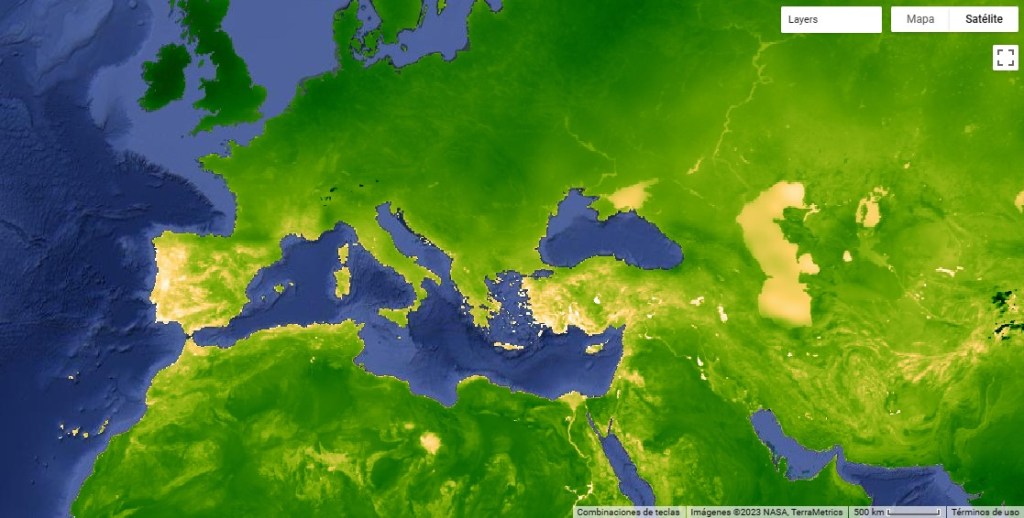
Reanalysis products offer valuable datasets for studying solar radiation. Let’s delve into the characteristics of some of these products:
1. ERA5-Land Hourly – ECMWF Climate Reanalysis:
ERA5-Land Hourly is a reanalysis dataset provided by the European Centre for Medium-Range Weather Forecasts (ECMWF). It offers an enhanced resolution compared to its predecessor, ERA-Interim, and provides hourly land variables, including solar radiation. With its high temporal resolution, researchers can analyze diurnal variations and short-term solar radiation patterns.
2. CFSR, Climate Forecast System Reanalysis:
CFSR, developed by NOAA NWS National Centers for Environmental Prediction (NCEP), is a global, high-resolution reanalysis dataset. It combines atmosphere, ocean, and land surface data, including solar radiation. Researchers can utilize CFSR to study solar radiation patterns in conjunction with other atmospheric and land surface variables.
3. MERRA-2 M2T1NXRAD: Radiation Diagnostics V5.12.4:
MERRA-2, provided by NASA/MERRA, offers a wealth of atmospheric and surface data, including radiation diagnostics. Researchers interested in detailed radiation measurements and diagnostics can leverage this dataset to study solar radiation fluxes, interactions, and their impacts on Earth’s systems.
4. GFS: Global Forecast System 384-Hour Predicted Atmosphere Data:
GFS, produced by NOAA/NCEP, is a widely used weather forecast model. It provides predicted atmospheric variables, including solar radiation, at a global scale and hourly intervals. Researchers can utilize GFS data to analyze short-term solar radiation patterns and assess their impacts on weather and climate conditions.
5. SPL4SMGP.007 SMAP L4 Global 3-hourly 9-km Surface and Root Zone Soil Moisture:
While primarily focused on soil moisture, the SPL4SMGP dataset also includes surface solar radiation. Researchers interested in analyzing the relationship between solar radiation and soil moisture dynamics can benefit from this dataset. It offers global coverage and a temporal resolution of 3 hours.
The following table provides a summary of key reanalysis products providing solar radiation data, their temporal resolution, and additional notes:
| Product Name | Description | Scale | Link | Additional Notes |
|---|---|---|---|---|
| ERA5-Land Hourly – ECMWF Climate Reanalysis | Reanalysis dataset providing land variables over several decades at an enhanced resolution compared to ERA-Interim | Hourly | [DOI] | High-resolution land variables data |
| ERA5-Land Daily Aggregated – ECMWF Climate Reanalysis | Reanalysis dataset providing land variables over several decades at an enhanced resolution compared to ERA-Interim | Daily | [DOI] | Aggregated land variables data at daily resolution |
| ERA5-Land Monthly Aggregated – ECMWF Climate Reanalysis | Reanalysis dataset providing land variables over several decades at an enhanced resolution compared to ERA-Interim | Monthly | [DOI] | Aggregated land variables data at monthly resolution |
| ERA5-Land Monthly Averaged by Hour of Day – ECMWF Climate Reanalysis | Reanalysis dataset providing land variables over several decades at an enhanced resolution compared to ERA-Interim | Hourly | [DOI] | Monthly averaged land variables data at hourly resolution |
| CFSR: Climate Forecast System Reanalysis | Global, high-resolution, coupled atmosphere-ocean land surface reanalysis dataset provided by NOAA NWS NCEP | Hourly | [DOI] | Global coverage, includes various atmospheric and land surface variables |
| MERRA-2 M2T1NXRAD: Radiation Diagnostics V5.12.4 | Hourly time-averaged radiation diagnostics dataset provided by NASA/MERRA | Hourly | [DOI] | Radiation diagnostics data at the global scale |
| GFS: Global Forecast System 384-Hour Predicted Atmosphere Data | Weather forecast model produced by NOAA/NCEP | Hourly | [Data Access] | Global weather forecast data |
| PRISM Long-Term Average Climate Dataset Norm91m | Gridded climate dataset for the conterminous United States, produced by PRISM Climate Group at Oregon State University | Monthly | [Explorer] | Provides long-term average climate data for the United States |
| SPL4SMGP.007 SMAP L4 Global 3-hourly 9-km Surface and Root Zone Soil Moisture | SMAP Level-4 (L4) soil moisture product provided by Google and NSIDC | 3-hourly | [DOI] | Global coverage, provides surface and root zone soil moisture data |
| TerraClimate: Monthly Climate and Climatic Water Balance for Global Terrestrial Surfaces | Monthly climate and climatic water balance dataset provided by the University of Idaho | Monthly | [DOI] | Global coverage, includes various climate variables and climatic water balance information |
Solar radiation data from reanalysis products offer valuable insights into energy availability, climate patterns, and environmental processes. These products provide researchers with a range of temporal resolutions and coverage, enabling in-depth analysis of solar radiation patterns and their role in shaping our environment.
When working with solar radiation data, it’s essential to consider the specific variables available, temporal and spatial resolutions, and coverage areas provided by each reanalysis product. Additionally, understanding the limitations and uncertainties associated with these datasets is crucial for accurate interpretation and analysis.
For local analyses and studies requiring finer spatial resolution, Hub-Terra specializes in developing custom products tailored to specific regions and research needs. Hub-Terra’s expertise lies in generating high-resolution datasets that provide detailed information at local scales.
In conclusion, whether studying climate change, ecosystem dynamics, or renewable energy potential, solar radiation data is a powerful tool for environmental analysis. This data, combined with Hub-Terra’s expertise and a range of environmental analysis services, offers powerful tools for understanding energy availability, climate patterns, species distributions, and human-wildlife interactions. By leveraging these resources, researchers and organizations can make informed decisions, advance scientific understanding, and contribute to sustainable environmental practices worldwide.
- European Centre for Medium-Range Weather Forecasts (ECMWF): https://www.ecmwf.int/
- National Oceanic and Atmospheric Administration (NOAA): https://www.noaa.gov/
- National Aeronautics and Space Administration (NASA): https://www.nasa.gov/
- Google and NASA Jet Propulsion Laboratory (JPL) Soil Moisture Active Passive (SMAP): https://smap.jpl.nasa.gov/
- Muñoz Sabater, J., (2019): ERA5-Land monthly averaged data from 1981 to present. Copernicus Climate Change Service (C3S) Climate Data Store (CDS). May 25, 2023, doi:10.24381/cds.68d2bb30
- Saha, S., S. Moorthi, H. Pan, X. Wu, J. Wang, and Coauthors, 2010: The NCEP Climate Forecast System Reanalysis. Bulletin of the American Meteorological Society, 91, 1015-1057. doi:10.1175/2010BAMS3001.1
- Global Modeling and Assimilation Office (GMAO) (2015), inst3_3d_asm_Cp: MERRA-2 3D IAU State, Meteorology Instantaneous 3-hourly (p-coord, 0.625×0.5L42), version 5.12.4, Greenbelt, MD, USA: Goddard Space Flight Center Distributed Active Archive Center (GSFC DAAC), Accessed May 25, 2023, at doi: 10.5067/VJAFPLI1CSIV.
- PRISM Climate Group, Oregon State University, https://prism.oregonstate.edu, data created 4 Feb 2014, accessed 23 May 2023.
- Reichle, R.H., G. De Lannoy, R.D. Koster, W.T. Crow, J.S. Kimball, Q. Liu, and M. Bechtold. 2022. SMAP L4 Global 3-hourly 9 km EASE-Grid Surface and Root Zone Soil Moisture Analysis Update, Version 7. Downward shortwave flux incident on the surface. Boulder, Colorado USA. NASA National Snow and Ice Data Center Distributed Active Archive Center. doi:10.5067/LWJ6TF5SZRG3
- Abatzoglou, J.T., S.Z. Dobrowski, S.A. Parks, K.C. Hegewisch, 2018, Terraclimate, a high-resolution global dataset of monthly climate and climatic water balance from 1958-2015, Scientific Data 5:170191, doi:10.1038/sdata.2017.191
Unlock Nature’s Secrets!
Subscribe Now to Stay Ahead in Conservation Science.
 Hub-Terra